Vegetos

(An International Journal of Plant Research & Biotechnology)
(eISSN: 2229-4473)
Phylogenetic evaluation of Pentactina rupicola, endemic to the Democratic People’s Republic of Korea, using DNA barcode
*Article not assigned to an issue yet
Ri Sok-Jun, Won Hyok-Min, Song Ju-Il, Choe So-Yong, Ho Un-Hyang, Jang Jin-Myong, Ho Chol-Su, Sin Myong-Ho, Ju Il-Yop
Short Communication | Published: 14 October, 2026
First Page: 0
Last Page: 0
Views: 13
Keywords: n Pentactina rupicolan , Phylogenetic analysis, DNAbarcode, Genus, Species
Abstract
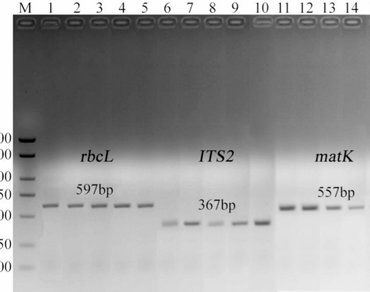
Pentactina rupicola is an endemic plant species of the DPR Korea which was first discovered in Kumgang County, Kangwon Province. We collected the samples from the Seson Peak, Mt. Kumgang and analyzed the sequences of ITS2 (internal transcribed spacer 2), rbcL (ribulose-1, 5-bisphosphate carboxylase/oxygenase large subunit), and matK (maturase K) used as DNA barcode. The highest homologous taxon of 597bp rbcL sequences is the Spiraea japonica (registered number: KJ841597, homologous 98%), Spiraea miyabei (registered number: JQ041776, homology 88%) for 367bp ITS2 sequences, and Spiraea thunbergii (registered number: FM179934.1, homology 98%) for 557bp matK sequences. We also constructed the phylogenetic tree of 71 taxa with high homology with ITS2, rbcL and matK sequences using the Maximum Likelihood method (ML). The result of phylogenetic analysis supports the unique taxonomic status of Pentactina rupicola as a single species of one genus of Rosaceae.
References
CBOL Plant Working Group (2009) A DNA barcode for land plants. Proc Natl Acad Sci U S A 106:12794–12797
David RM, Douglas ES, Kenneth RR (1994) Systematic and evolutionary implications of rbcL sequence variation in Rosaceae. Am J Bot 81(7):890–903
Doyle JJ, Doyle JL (1990) Isolation of plant DNA from fresh tissue. Focus (Am Chem Soc) 12:13–15
Feng T-T, Zhou Z-Q, Tang J-M, Cheng M-H, Zhou S-L (2007) ITS sequence variation supports the hybrid origin of Malus toringoides Hughes. Can J Bot 85:659–666. https://doi.org/10.1139/B07-050
Fu P-C, Gao Q-B, Zhang F-Q, Xing R, Khan G, Wang J-L, Liu H-R, Chen S-L (2016) Responses of plants to changes in QinghaieTibetan Plateau and glaciations: evidence from phylogeography of a Sibiraea (Rosaceae) complex. Biochem Syst Ecol 65:72–82
Ho U-H, Kye JS, Choe SI, Kim JH, Kim MH (2021) Molecular distinction among mulberry (Morus spp.) species and varieties cultivated in the Democratic People’s Republic of Korea. Genet Resour Crop Evol 68:3103–3114
Ho U-H, Ri J-H, Ri C-J (2022a) Identification of new stock (Matthiola incana R Br) cultivars with high fertility through morphological and molecular markers. Genetic Resour Crop Evol 69:2719–2730
Ho U-H, Song S-R, Pak H-S, Kim K, Ho T-S, Ju I-Y (2022b) Genetic evidence of stable northward extension of Pinus thunbergii Parl. forests in the Democratic People’s Republic of Korea. Genet Resour Crop Evol 69:2105–2114
Im R-J (1997) Flora Coreana 3. The Science and Technology Publishing House, Pyongyang, pp 184–205
Kress WJ, Erickson DL (2012) DNA barcodes methods and protocols. Springer, New York, Dordrecht, Heidelberg and London, pp 379–394
Liu CY, Wang GL, Wang H, Xia T, Zhang SZ, Wang QG, Fang YM (2015) Phylogenetic relationships in the genus Rosa revisited based on rpl16, trnLF, and atpB-rbcL sequences. HortScience 50(11):1618–1624
Maloukh L, Kumarappan A, Jarrar M, Salehi J, El-wakil H, Lakshmi TR (2017) Discriminatory power of rbcL barcode locus for authentication of some of United Arab Emirates (UAE) native plants. 3Biotech 7(2):1–7. https://doi.org/10.1007/s13205-017-0746-1
Morgan DR, Soltis DE, Robertson KR (1994) Systematic and evolutionary implications of rbcL sequence variation in Rosaceae. Am J Bot 81:890–903
Author Information
Faculty of Life Science, Kim Il Sung University, Pyongyang, Democratic People’s Republic of Korea