Vegetos

(An International Journal of Plant Research & Biotechnology)
(eISSN: 2229-4473)
Physicochemical characterization and antifungal mode of action of chitin and chitosan against cercospora leaf spot disease
*Article not assigned to an issue yet
Bashir A. A., Kutama A. S., Auyo M. I., Mohammad M., Idris A., Mohammad S. S., Momoh T. B., Adeniyi K. A., Ndah A. F., Kokori B. T.
Research Articles | Published: 09 October, 2026
First Page: 0
Last Page: 0
Views: 100
Keywords: Antifungal, Chiton, Chitosan, Deacetylation, Deproteinization
Abstract
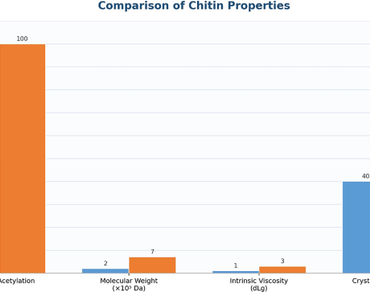
The increasing need for eco-friendly alternatives to synthetic agrochemicals has sparked interest in natural compounds with antifungal properties. Chitin, a biopolymer found in crustacean shells, offers possibilities for crop protection and waste reuse. This study, “physicochemical characterization and antifungal mode of action of chitin and chitosan against cercospora leaf spot disease,” investigated chitin and its derivatives, extracted from crayfish (Procambarus clarkii.) shells against Cercospora beticola. Chitin was obtained through deproteinization and demineralization, resulting in a yield of 18.4 ± 0.8% (w/w), low moisture (6.8 ± 0.3%), and ash content (1.2 ± 0.1%). Deacetylation produced chitosan with an efficiency of 76.2 ± 2.1%. FTIR confirmed successful modification: chitin had a high degree of acetylation (92.6 ± 1.4%), while chitosan had a lower value (28.3 ± 2.1%) with better solubility. Molecular weights were 847,000 ± 35,000 Da for chitin and 592,000 ± 28,000 Da for chitosan. Antifungal tests showed concentration-dependent inhibition, with chitin producing zones up to 19.6 ± 0.8 mm and reducing mycelial growth by 64.7 ± 1.9% at 5.0 mg/mL. Chitosan had greater potency (IC?? = 1.8 ± 0.1 mg/mL) compared to chitin (3.2 ± 0.2 mg/mL). Spore germination was decreased by 71.6 ± 1.8% at 5.0 mg/mL after 24 h. Enzyme tests indicated low-concentration stimulation but strong inhibition of chitinase and glucanase at higher doses, disrupting fungal cell wall metabolism. These results highlight the antifungal potential of crayfish-derived chitin and chitosan, supporting their use in sustainable agriculture and waste-to-value approaches for eco-friendly crop protection.
References
Backman PA, Rodrigues J (2005) The role of Cercospora leaf spot in peanut yield reduction. Plant Dis 89(12):1345–1352
Brent KJ, Hollomon DW (2007) Fungicide resistance in crop pathogens: How can it be managed? Fungicide Resistance Action Committee Monograph, pp 1–60
Daub ME, Ehrenshaft M (2000) The photoactivated toxin cercosporin: contributions to plant disease and fundamental biology. Annu Rev Phytopathol 38(1):461–490. https://doi.org/10.1146/annurev.phyto.38.1.461
Díaz Arias MM, Thomas AL, Sautter RT, Dorrance AE (2013) Cercospora leaf spot in soybean: biology, damage, and management strategies. Plant Pathol J 32(4):267–280
El-Hadrami A, Adam LR, El-Hadrami I, Daayf F (2010) Chitosan in plant protection. Mar Drugs 8(4):968–987. https://doi.org/10.3390/md8040968
Fernández-Ortuño D, Torés JA, de Vicente A, Pérez-García A (2010) The QoI fungicides, the rise and fall of a successful class of fungicides. In: Advances in Microbial Physiology (Vol. 69, pp. 211–263). Elsevier. Fungicides - Google Books
Gao F, Zhou X, Wang Y, Chen L (2023) Exploring the antifungal mechanism of β-1,3-glucanase for fungal cell-wall degradation. J Mol Microbiol Biotechnol 33(4):189–202. https://doi.org/10.1016/j.jmb.2023.08.011
Hamed I, Özogul F, Regenstein JM (2016) Industrial applications of crustacean by-products (chitin, chitosan, and chitooligosaccharides): a review. Trends Food Sci Technol 48:40–50. https://doi.org/10.1016/j.tifs.2015.11.007
Imbusch F, Liebe S, Erven T, Varrelmann M (2021) Dynamics of Cercospora leaf spot disease determined by aerial spore dispersal in artificially inoculated sugar beet fields. Plant Pathol 70(3):853–861. https://doi.org/10.1111/ppa.13207
Jiménez-Maldonado MI, López-Martínez LX, Cruz-Rangel S, Hernández-Cruz BC, López-Gómez R (2024) Glucanases and chitinases in Mangifera indica: Insights into plant defense responses. Molecules 29(15):3556. https://doi.org/10.3390/molecules29153556
Kaya M, Mujtaba M, Bulut E, Akyuz B, Zelencova L, Sofi K (2015) Fluctuation in physicochemical properties of chitins extracted from different body parts of honeybee. Carbohydr Polym 132:9–16. https://doi.org/10.1016/j.carbpol.2015.06.008
Kong M, Chen XG, Xing K, Park HJ (2010) Antimicrobial properties of chitosan and mode of action: a state of the art review. Int J Food Microbiol 144(1):51–63. https://doi.org/10.1016/j.ijfoodmicro.2010.09.012
Kumar MNVR (2000) A review of chitin and chitosan applications. React Funct Polym 46(1):1–27. https://doi.org/10.1016/S1381-5148(00)00038-9
Kumirska J (2010) Biomedical activity of chitin/chitin-based materials. Polymers (Basel) 2(4):250–254. https://doi.org/10.3390/polym2040250
Liu F, Chen Y, Huang Y, Jin Q, Ji J (2024) Nanomaterial-based therapeutics for enhanced antifungal therapy. J Mater Chem B 12(37):9173–9198. https://doi.org/10.1039/D4TB01484G
Lucas JA, Hawkins NJ, Fraaije BA (2015) The evolution of fungicide resistance. Adv Appl Microbiol 90:29–92. https://doi.org/10.1016/bs.aambs.2014.09.001
Murray HW, Pascal S (2020) Chitin and its derivatives: versatile and sustainable materials for the future. Chem Rev 120(5):2345–2377. https://doi.org/10.1021/acs.chemrev.9b00898
Pande SV, Rathod VK, Sawant RS (2010) Extraction of chitin from prawn shell waste using microwave-assisted deproteinization. Carbohyd Polym 80(3):891–895. https://doi.org/10.1016/j.carbpol.2009.12.048
Rabea EI, Badawy MET, Stevens CV, Smagghe G, Steurbaut W (2003) Chitosan as antimicrobial agent: applications and mode of action. Biomacromol 4(6):1457–1465. https://doi.org/10.1021/bm034130m
Rinaudo M (2006) Chitin and chitosan: properties and applications. Prog Polym Sci 31(7):603–632
Sharp RG (2013) A review of the applications of chitin and its derivatives in agriculture to modify plant-microbial interactions and improve crop yields. Agronomy 3(4):757–793. https://doi.org/10.3390/agronomy3040757
Stefan C, Margareta JH, Bruno MM (2025) Degree of acetylation of chitosans determined by size exclusion chromatography coupled to UV and refractive index detection. Carbohydr Polym. https://doi.org/10.1016/j.carbpol.2025.124329
Younes I, Rinaudo M (2023) Chitin and chitosan preparation from marine sources. Structure, properties and applications. Mar Drugs 13(3):1133–1174. https://doi.org/10.3390/md13031133
Zhang Y, Li S, Li H, Wang R, Zhang KQ, Xu J (2020) Fungi–nematode interactions: diversity, ecology, and biocontrol prospects in agriculture. J Fungi 6(4):206. https://doi.org/10.3390/jof6040206
Faoro F, Maffi D, Cantu D, Iriti M (2008) Chemical-induced resistance against powdery mildew in barley: The effects of chitosan and benzothiadiazole. Biocontrol 53(2):387–401. https://doi.org/10.1007/s10526-007-9091-3
Vincent JM (1947) Distortion of fungal hyphæ in the presence of certain inhibitors. Nature 159(4051):850. https://doi.org/10.1038/159850b0
Author Information
Department of Plant Science and Biotechnology, Faculty of Natural Sciences, Prince Abubakar Audu University, Anyigba, Nigeria