Vegetos

(An International Journal of Plant Research & Biotechnology)
(eISSN: 2229-4473)
Rediscovery, conservation assessment and ecological niche modelling of the high-altitude endemic orchid Habenaria flabelliformis (Orchidaceae) from Western Ghats, India
*Article not assigned to an issue yet
Research Articles | Published: 10 September, 2026
First Page: 0
Last Page: 0
Views: 130
Keywords: IUCN Red List criteria, MaxEnt model, Outside type locality, Southern Western Ghats
Abstract
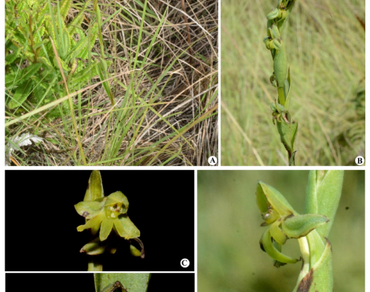
Habenaria flabelliformis (Orchidaceae) was first collected by E. Barnes as a solitary specimen from the slopes of Anaimudi in the Western Ghats of Kerala and subsequently described in 1936. Following the type collection, there were no subsequent records of the species from the Western Ghats for eight decades. However, in 2016, a small population was rediscovered outside the type locality in the Palani Hills of the Western Ghats, Tamil Nadu. This study successfully located the species at type locality, Anaimudi, in the Western Ghats of Kerala. Using new data from extensive field surveys, the conservation status of H. flabelliformis was reassessed following the IUCN Red List criteria. The species is declining due to combined natural and anthropogenic pressures. To support conservation and habitat restoration, we used the MaxEnt model to predict the current suitable potential niche of H. flabelliformis. The model offers valuable insights for forecasting potential distribution patterns and guiding conservation strategies.
References
Abraham A, Vatsala P (1981) Introduction to orchids with illustration and descriptions of 150 South Indian. Tropical Botanical Garden and Research Institute, Thiruvananthapuram, India
Acharya KP, Vetaas OR, Birks HJB (2011) Orchid species richness along Himalayan elevational gradients. J Biogeogr 38(9):1821–1833. https://doi.org/10.1111/j.1365-2699.2011.02511.x
CAMP (Conservation Assessment and Management Plan) workshop (2001) Endemic Orchids of the Western Ghats, Report. Wildlife Information Liaison Development Society and Zoo Outreach Organisation, Coimbatore
Govaerts R, Bernet P, Kratochvil K, Gerlach G, Carr G, Alrich P, Pridgeon AM, Pfahl J, Campacci MA, Baptista DH, Tiggesh, Shaw J, Cribb PJ, George A, Kreutz K, Wood JJ (2025) World checklist of Orchidaceae. Facilitated by the Royal Botanic Gardens, Kew. Available at: http://apps.kew.org/wcsp. Accessed on 01 Jan 2026.
Fahey TJ, Sherman RE, Tanner EV (2016) Tropical montane cloud forest: environmental drivers of vegetation structure and ecosystem function. J Trop Ecol 32(5):355–367
Fischer CEC (1936) Addenda . In: Gamble JS (eds) Flora of the presidency of Madras, vol 3. Adlard & Son, London
Henry AN, Vivekanandan K, Nair NC (1979) Rare and threatened flowering plants of South India. J Bombay Nat Hist Soc 75:684–697
Hsu RCC, Chen YC, Lin C (2024) The impact of changing climate on an endangered epiphytic orchid (Pleione formosana) in a montane cloud forest and the conservation challenge ahead. Plants (Basel) 13(17):2414. https://doi.org/10.3390/plants13172414
IUCN Standards and Petitions Subcommittee (2024) Guidelines for using the IUCN red list categories and criteria, ver. 16. IUCN Species Survival Commission. Available from: http://jr.iucnredlist.org/documents/RedListGuidelines.pdf
Jain SK, Sastry ARK (1984) The Indian plant red data book. Botanical Survey of India, Calcutta
Jalal JS, Jayanthi J (2012) Endemic orchids of peninsular India: a review. J Threat Taxa 4(15):3415–3425. https://doi.org/10.11609/JoTT.o3091.3415-25
Jalal JS, Jayanthi J, Kumar PS (2019) Habenaria agasthyamalaiana (orchidaceae), a new terrestrial orchid from the southern western Ghats, India. Lankesteriana 19(2):93–98. https://doi.org/10.15517/lank.v19i2.38612
Karuppusamy S, Prasad K, Pullaiah T (2022) Orchids of Tamil Nadu, India. Scientific Publishers, Jodhpur, India
Kotilínek M, T?šitelová T, Košnar J, Fibich P, Hemrová L, Koutecký P, Münzbergová Z, Jersáková J (2020) Seed dispersal and realized gene flow of two forest orchids in a fragmented landscape. Plant Biol (Stuttg) 22(3):522–532. https://doi.org/10.1111/plb.13099
Luke RR, Janovec JP, Christenson E, Pinder JE III, McNew Barfield K (2010) Diversity and abundance of orchids in a Peruvian cloud forest. J Bot Res Inst Texas 4(1):317–332
Mittermeier RA, Gil PR, Hoffman M, Pilgrim J, Brooks T, Mittermeier CG, Lamoureux J, Da Foncesca GAB (2005) Hotspots revisited: Earth’s biologically richest and most endangered terrestrial ecoregions. Conservation International, Washington DC & Cemex
Myers N, Mittermeier RA, Mittermeier CG, Da Fonseca GAB, Kent J (2000) Biodiversity hotspots for conservation priorities. Nature 403:853–858. https://doi.org/10.1038/35002501
Nayar MP, Sastry ARK (1987, 1988, 1990). Red data book of Indian plants, vol 1–3. Botanical Survey of India, Calcutta
Nayar TS, Sibi M, Rasiya Beegam A (2014) Flowering plants of the Western Ghats, India, vol 2. Jawaharlal Nehru Tropical Botanic Garden and Research Institute, Thiruvananthapuram
Prasad K (2029) A new species of Habenaria (Orchidaceae) from the Western Ghats, India. Webbia 74(1):63–66. https://doi.org/10.1080/00837792.2019.1599651
Prasad K, Venu P (2015) A new generic status to section Plectoglossa (Orchidaceae: Habenaria). Rheedea 25(2):86–93. https://doi.org/10.22244/rheedea.2015.25.02.02
Prasad K, Naik MC (2020) Habenaria rangatensis (Orchidaceae), a new species from Andaman and Nicobar Islands, India. Phytotaxa 442(1):27–32. https://doi.org/10.11646/phytotaxa.442.1.4
Rao CK, Geetha BL, Suresh G (2003) Red list of threatened vascular plant species in India. Botanical Survey of India, Calcutta
Reddy CS, Jha CS, Diwakar PG, Dadhwal VK (2015) Nationwide classification of forest types of India using remote sensing and GIS. Environ Monit Assess 187(12):777. https://doi.org/10.1007/s10661-015-4990-8
Rupprecht F, Oldeland J, Finckh M (2011) Modelling potential distribution of the threatened tree species Juniperus oxycedrus: how to evaluate the predictions of different modelling approaches? J Veg Sci 22(4):647–659
Sathish Kumar C, Manilal KS (2004) Orchids of Kerala. In: Manilal KS, Sathish Kumar C (eds) Orchid memories. Mentor Books, Calicut, India
Schödelbauerová I, Kindlmann P, Roberts D (2007) The species-area-energy relationship in orchids. Lankesteriana 7(1–2):209–214
Singh P, Karthigeyan K, Lakshminarasimhan P, Dash SS (2015) Endemic vascular plants of India. Botanical Survey of India, Kolkata
Singh SK, Agrawala DK, Jalal JS, Dash SS, Mao AA, Singh P (2019) Orchids of India, a pictorial guide. Botanical Survey of India, Kolkata
Singh SK, Agrawala DK, Jalal JS, Mao AA, Singh P (2020) Orchidaceae. In: Mao AA, Dash SS (eds) Flowering plants of India, an annotated checklist, monocotyledons, vol 3. Botanical Survey of India. Kolkata.
Sperduto MB, Congalton RG (1996) Predicting rare orchid (small whorled pogonia) habitat using GIS. Photogramm Eng Remote Sens 62(11):1269–1279 http://dx.doi.org/10.1126/science.3287615
Vogt P, Riitters K (2017) Guidostoolbox: universal digital image object analysis. Eur J Remote Sens 50(1):352–361
https://portal.opentopography.org/
https://www.earthenv.org/cloud.
https://forest.jrc.ec.europa.eu/en/activities/lpa/gtb/
https://gedi.umd.edu/
Author Information
Department of Botany, Sri Venkateswara College, University of Delhi, Dhaulakuan, India