Vegetos

(An International Journal of Plant Research & Biotechnology)
(eISSN: 2229-4473)
Application of MnS nanoparticles in field conditions elevates morpho-physio-biochemical characteristics and oil content in Eruca sativa L. (Arugula)
*Article not assigned to an issue yet
Research Articles | Published: 29 April, 2026
First Page: 0
Last Page: 0
Views: 98
Keywords: SOD, POD, Antioxidants, FT-IR, GC-MS, NMR
Abstract
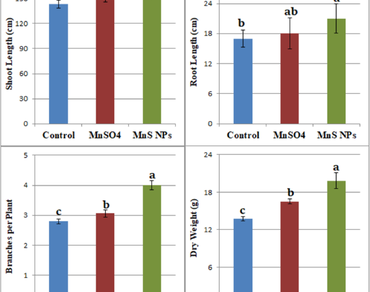
Manganese based nanoparticles have potential to revolutionize agricultural practices for enhanced nutrient uptake, growth, and yield. In present study, the effect of manganese sulfide (MnS) nanoparticles (NPs) was evaluated on Eruca sativa grown under field condition. Spherical crystals of 8 nm MnS NPs applied at 8 kg/ha through broadcasting method markedly increased agronomic parameters i.e., root length up to 23.52%, shoot length 9.91%, branches plant− 1 42.85%, dry weight plant− 1 44.14%, fruit count 52.98%, seed fruit− 1 4.98%, and seed oil content 15.04%. Atomic absorption spectroscopy revealed a preferential accumulation of Mn in plant tissues, with the highest concentration in roots (61.2 mg/kg DW), followed by shoots (42.06 mg/kg DW), and seeds (19.46 mg/kg DW). Biochemical analysis showed a substantial improvement in protein content (174.2%), superoxide dismutase (96.07%) and peroxidase (125.39%) activities. The root and shoot of E. sativa plant treated with MnS NPs displayed enhanced total phenolic content, total flavonoid content, DPPH free radical scavenging activity, total reducing power, and total antioxidant capacity as compared to control. FT-IR, GC-MS, and NMR analysis of oil indicated that MnS NPs increased oil yield but fatty acid profile and oil quality remained unchanged. These outcomes of this study highlight the potential of MnS NPs as sustainable agro-inputs that can improve plant performance and biochemical profiles without compromising the nutritional quality of oil.
References
Aarabi F, Rakpenthai A, Barahimipour R, Gorka M, Alseekh S, Zhang Y, Hoefgen R (2021) Sulfur deficiency-induced genes affect seed protein accumulation and composition under sulfate deprivation. Plant Physiol 187(4):2419–2434. https://doi.org/10.1093/plphys/kiab386
Abdelrahman MH, Hussain RO, Shaheed DS, AbuKhader M, Khan SA (2019) Gas chromatography-mass spectrometry analysis and in vitro biological studies on fixed oil isolated from the waste pits of two varieties of Olea europaea L. OCL, 26, 28. https://doi.org/10.1051/ocl/2019022
Abdin MZ, Ahmad A, Khan N, Khan I, Jamal A, Iqbal M (2003) Sulphur interaction with other nutrients. In: Abrol YP, Ahmad A (eds) Sulphur in Plants. Kluwer Academic, The Netherlands, pp 359–374. https://doi.org/10.1007/978-94-017-0289-8_20
Ahuja R, Sidhu A, Bala A (2020) Manganese sulfide nanospheres as mycocidal material and priming agent for fungi-infested rice seeds. J Phytopathol 168(11–12):678–687. https://doi.org/10.1111/jph.12948
Almajano MP, Carbo R, Jiménez JAL, Gordon MH (2008) Antioxidant and antimicrobial activities of tea infusions. Food Chem 108(1):55–63. https://doi.org/10.1016/j.foodchem.2007.10.040
Astill C, Birch MR, Dacombe C, Humphrey PG, Martin PT (2001) Factors affecting the caffeine and polyphenol contents of black and green tea infusions. J Agric Food Chem 49(11):5340–5347. https://doi.org/10.1021/jf010759+
Azim Z, Singh NB, Singh A, Amist N, Niharika, Khare S, Yadav V (2023) A review summarizing uptake, translocation and accumulation of nanoparticles within the plants: current status and future prospectus. J Plant Biochem Biotechnol 32(2):211–224. https://doi.org/10.1007/s13562-022-00800-6
Babu SNS, Hegde DM (2010) Delineation of sulphur deficient soil and evaluation of oilseed crops responses to sulphur. Fert Market News 33:9–17
Brady NC, Weil RR (2002) The nature and properties of soils. Pearson Education, Singapore
Chen H (2018) Metal based nanoparticles in agricultural system: behavior, transport, and interaction with plants. Chem Speciat Bioavailab 30(1):123–134. https://doi.org/10.1080/09542299.2018.1520050
Chen RS, Zhang L, Wei FJ, Yuan LY, Zhao P, Wang HY, Gong YF (2021) Effects of Mn2+ on neutral lipid content, C 4 pathway, and related gene expression in Phaeodactylum tricornutum. J Appl Phycol 33:2123–2133. https://doi.org/10.1007/s10811-021-02471-7
Doğaroğlu ZG, Köleli N (2017) TiO2 and ZnO nanoparticles toxicity in barley (Hordeum vulgare L). Clean–Soil Air Water 45(11):1700096. https://doi.org/10.1002/clen.201700096
Elmer WH, White JC (2016) The use of metallic oxide nanoparticles to enhance growth of tomatoes and eggplants in disease infested soil or soilless medium. Environ Science: Nano 3(5):1072–1079. https://doi.org/10.1039/C6EN00146G
Fageria NK (2016) The use of nutrients in crop plants. CRC
Fan H, Guo Z (2023) Tumor microenvironment-responsive manganese-based nanomaterials for cancer treatment. Coord Chem Rev 480:215027. https://doi.org/10.1016/j.ccr.2023.215027
Fatima A, Mumtaz MW, Mukhtar H, Akram S, Touqeer T, Rashid U, Saiman MI (2020) Synthesis of lipase-immobilized CeO2 nanorods as heterogeneous nano-biocatalyst for optimized biodiesel production from Eruca sativa seed oil. Catalysts 10(2):231. https://doi.org/10.3390/catal10020231
Fazili IS, Masoodi M, Ahmad S, Jamal A, Khan JS, Abdin MZ (2010) Oil biosynthesis and its related variables in developing seeds of mustard (Brassica juncea L.) as influenced by sulphur fertilization. J Crop Sci Biotechnol 13:39–46. https://doi.org/10.1007/s12892-009-0117-5
Fratianni F, Pepe S, Cardinale F, Granese T, Cozzolino A, Coppola R, Nazzaro F (2014) Eruca sativa might influence the growth, survival under simulated gastrointestinal conditions and some biological features of Lactobacillus acidophilus, Lactobacillus plantarum and Lactobacillus rhamnosus strains. Int J Mol Sci 15(10):17790–17805. https://doi.org/10.3390/ijms151017790
González A, Steffen KL, Lynch JP (1998) Light and excess manganese: implications for oxidative stress in common bean. Plant Physiol 118(2):493–504. https://doi.org/10.1104/pp.118.2.493
Guillén MD, Ruiz A (2001) High resolution 1H nuclear magnetic resonance in the study of edible oils and fats. Trends Food Sci Technol 12(9):328–338. https://doi.org/10.1016/S0924-2244(01)00101-7
Hama JR, Fitzsimmons-Thoss V (2022) Determination of unsaturated fatty acids composition in walnut (Juglans regia L.) oil using NMR spectroscopy. Food Anal Methods 15(5):1226–1236. https://doi.org/10.1007/s12161-021-02203-0
Haydar MS, Ghosh D, Roy S (2024) Slow and controlled release nanofertilizers as an efficient tool for sustainable agriculture: Recent understanding and concerns. Plant Nano Biology 7:100058. https://doi.org/10.1016/j.plana.2024.100058
Hossain Z, Mustafa G, Komatsu S (2015) Plant responses to nanoparticle stress. Int J Mol Sci 16(11):26644–26653. https://doi.org/10.3390/ijms161125980
Jaafar NS, Jaafar IS (2019) Eruca sativa Linn.: Pharmacognostical and pharmacological properties and pharmaceutical preparations. Asian J Pharm Clin Res 12(3):39–45. https://doi.org/10.22159/ajpcr.2019.v12i3.30893
Javed R, Yucesan B, Zia M, Gurel E (2022) Nanoelicitation: a promising and emerging technology for triggering the sustainable in vitro production of secondary metabolites in medicinal plants. Plant and nanoparticles. Springer, Singapore, pp 265–280. https://doi.org/10.1007/978-981-19-2503-0_10Nature Singapore
Jiang Y, Zhou P, Ma T, Adeel M, Shakoor N, Li Y, Rui Y (2023) Effects of two Mn-based nanomaterials on soybean antioxidant system and mineral element homeostasis. Environ Sci Pollut Res 30(7):18880–18889. https://doi.org/10.1007/s11356-022-23559-8
Kachel M, Stryjecka M, Ślusarczyk L, Matwijczuk A, Budziak-Wieczorek I, Gładyszewski G (2023) Impact of metal nanoparticles on the phytochemical and antioxidative properties of rapeseed oil. Materials 16(2):694. https://doi.org/10.3390/ma16020694
Khalid U, Sher F, Noreen S, Lima EC, Rasheed T, Sehar S, Amami R (2022) Comparative effects of conventional and nano-enabled fertilizers on morphological and physiological attributes of Caesalpinia bonducella plants. J Saudi Soc Agricultural Sci 21(1):61–72. https://doi.org/10.1016/j.jssas.2021.06.011
Khan J, Sajjad A, Rukh M, Khan K, Hassan SW, Zia M (2024a) Comparative growth, biochemical and antioxidative response of Glycine max and Sesamum indicum to MnS nanoparticles. Biocatal Agric Biotechnol 61:103386. https://doi.org/10.1016/j.bcab.2024.103386
Khan J, Sajjad A, Rukh M, Khan K, Hassan SW, Zia M (2024b) Comparative growth, biochemical and antioxidative response of Glycine max and Sesamum indicum to MnS nanoparticles. Biocatal Agric Biotechnol 61:103386. https://doi.org/10.1016/j.bcab.2024.103386
Khepar V, Sidhu A, Sharma AB, Sharma P (2023a) Zinc sulfide nano aqua formulation as antifungal nanopriming agent against phytopathogens of paddy seeds: in silico, in vitro and seed treatment studies. Eur J Plant Pathol 165(3):509–524. https://doi.org/10.1007/s10658-022-02623-6
Khepar V, Ahuja R, Sidhu A, Samota MK (2023b) Nano-sulfides of Fe and Mn efficiently augmented the growth, antioxidant defense system, and metal assimilation in rice seedlings. ACS omega 8(33):30231–30238. https://doi.org/10.1021/acsomega.3c03012
Khiew P et al (2011) Palm Oil: Nutrition, Uses and Impacts. Nova Science Publishers, Inc., pp 189–219
Khoobchandani M, Ojeswi BK, Ganesh N, Srivastava MM, Gabbanini S, Matera R, Valgimigli L (2010) Antimicrobial properties and analytical profile of traditional Eruca sativa seed oil: Comparison with various aerial and root plant extracts. Food Chem 120(1):217–224. https://doi.org/10.1016/j.foodchem.2009.10.011
Kopittke PM, Blamey FPC, Asher CJ, Menzies NW (2010) Trace metal phytotoxicity in solution culture: a review. J Exp Bot 61(4):945–954. https://doi.org/10.1093/jxb/erp385
Lagrimini L (1980) Plant peroxidases: Under-and over-expression in transgenic plants and physiological consequences. Plant peroxidases 1990:59–69
Landa P, Cyrusova T, Jerabkova J, Drabek O, Vanek T, Podlipna R (2016) Effect of metal oxides on plant germination: phytotoxicity of nanoparticles, bulk materials, and metal ions. Water Air Soil Pollut 227:1–10. https://doi.org/10.1007/s11270-016-3156-9
Liu P, Huang R, Hu X, Jia Y, Li J, Luo J, Chen Z (2019) Physiological responses and proteomic changes reveal insights into Stylosanthes response to manganese toxicity. BMC Plant Biol 19:1–21. https://doi.org/10.1186/s12870-019-1822-y
Liu R, Zhang H, Lal R (2016) Effects of stabilized nanoparticles of copper, zinc, manganese, and iron oxides in low concentrations on lettuce (Lactuca sativa) seed germination: nanotoxicants or nanonutrients? Water Air Soil Pollut 227:1–14. https://doi.org/10.1007/s11270-015-2738-2
Lowry OH, Rosebrough NJ, Farr AL, Randall RJ (1951) Protein measurement with the Folin phenol reagent. J biol Chem 193(1):265–275
Lu Q, Wang X, Hu X, Cebe P, Omenetto F, Kaplan DL (2010) Stabilization and release of enzymes from silk films. Macromol Biosci 10(4):359–368. https://doi.org/10.1002/mabi.200900388
Ma X, Geiser-Lee J, Deng Y, Kolmakov A (2010) Interactions between engineered nanoparticles (ENPs) and plants: phytotoxicity, uptake and accumulation. Sci Total Environ 408(16):3053–3061. https://doi.org/10.1016/j.scitotenv.2010.03.031
Marschner H (2012) Marschner’s Mineral Nutrition of Higher Plants, 3rd edn. Academic, Boston, MA, USA, pp 202–203
Martínez-Ballesta MC, López-Pérez L, Hernández M, López-Berenguer C, Fernández-García N, Carvajal M (2008) Agricultural practices for enhanced human health. Phytochem Rev 7(2):251–260. https://doi.org/10.1007/s11101-007-9071-3
Millaleo R, Reyes-Díaz M, Ivanov AG, Mora ML, Alberdi M (2010) Manganese as essential and toxic element for plants: transport, accumulation and resistance mechanisms. J soil Sci plant Nutr 10(4):470–481. https://doi.org/10.4067/S0718-95162010000200008
Mondal S, Pramanik K, Panda D, Dutta D, Karmakar S, Bose B (2022) Sulfur in seeds: an overview. Plants 11(3):450. https://doi.org/10.3390/plants11030450
Mousavi SR, Shahsavari M, Rezaei M (2011) A general overview on manganese importance for crops production. Aust J Basic Appl Sci 5(9):1799–1803
Nair PMG, Chung IM (2014) Impact of copper oxide nanoparticles exposure on Arabidopsis thaliana growth, root system development, root lignificaion, and molecular level changes. Environ Sci Pollut Res 21:12709–12722. https://doi.org/10.1007/s11356-014-3210-3
Nair R, Varghese SH, Nair BG, Maekawa T, Yoshida Y, Kumar DS (2010) Nanoparticulate material delivery to plants. Plant Sci 179(3):154–163. https://doi.org/10.1016/j.plantsci.2010.04.012
Nazir S, Jan H, Zaman G, Khan T, Ashraf H, Meer B, Abbasi BH (2021) Copper oxide (CuO) and manganese oxide (MnO) nanoparticles induced biomass accumulation, antioxidants biosynthesis and abiotic elicitation of bioactive compounds in callus cultures of Ocimum basilicum (Thai basil). Artif Cells Nanomed Biotechnol 49(1):625–633. https://doi.org/10.1080/21691401.2021.1984935
Neto ME, Britt DW, Jackson KA, Almeida Junior JH, Lima RS, Zaia DA, Batista MA (2023) Synthesis and characterization of zinc, iron, copper, and manganese oxides nanoparticles for possible application as plant fertilizers. J Nanomaterials 2023(1):1312288. https://doi.org/10.1155/2023/1312288
Ogunkunle CO, Jimoh MA, Asogwa NT, Viswanathan K, Vishwakarma V, Fatoba PO (2018) Effects of manufactured nano-copper on copper uptake, bioaccumulation and enzyme activities in cowpea grown on soil substrate. Ecotoxicol Environ Saf 155:86–93. https://doi.org/10.1016/j.ecoenv.2018.02.070
Parihar JK, Parihar PK, Pakade YB, Katnoria JK (2021) Bioaccumulation potential of indigenous plants for heavy metal phytoremediation in rural areas of Shaheed Bhagat Singh Nagar, Punjab (India). Environ Sci Pollut Res 28:2426–2442. https://doi.org/10.1007/s11356-020-10454-3
Porto RA, Bonfim-Silva EM, Souza DSM, Cordova NRM, Polizel AC, Silva TJA (2013) Potassium fertilization in arugula plants: production and efficiency in water use. In Artigo Científico, vol. 7, no. 1, pp. 28–35
Pradhan S, Patra P, Das S, Chandra S, Mitra S, Dey KK, Goswami A (2013) Photochemical modulation of biosafe manganese nanoparticles on Vigna radiata: a detailed molecular, biochemical, and biophysical study. Environ Sci Technol 47(22):13122–13131. https://doi.org/10.1021/es402659t
Prior RL, Wu X, Schaich K (2005) Standardized methods for the determination of antioxidant capacity and phenolics in foods and dietary supplements. J Agric Food Chem 53(10):4290–4302. https://doi.org/10.1021/jf0502698
Quah B, Musante C, White JC, Ma X (2015) Phytotoxicity, uptake, and accumulation of silver with different particle sizes and chemical forms. J Nanopart Res 17:1–13. https://doi.org/10.1007/s11051-015-3079-1
Ramazzina I, Lolli V, Lacey K, Tappi S, Rocculi P, Rinaldi M (2022) Fresh-cut Eruca Sativa treated with plasma activated water: Evaluation of antioxidant capacity, polyphenolic profile and redox status in Caco2 cells. Nutrients 14(24):5337. https://doi.org/10.3390/nu14245337
Ribera-Fonseca A, Inostroza-Blancheteau C, Cartes P, Rengel Z, Mora ML (2013) Early induction of Fe-SOD gene expression is involved in tolerance to Mn toxicity in perennial ryegrass. Plant Physiol Biochem 73:77–82. https://doi.org/10.1016/j.plaphy.2013.08.012
Rico CM, Majumdar S, Duarte-Gardea M, Peralta-Videa JR, Gardea-Torresdey JL (2011) Interaction of nanoparticles with edible plants and their possible implications in the food chain. J Agric Food Chem 59(8):3485–3498. https://doi.org/10.1021/jf104517j
Sajjad A, Bhatti SH, Ali Z, Jaffari GH, Khan NA, Rizvi ZF, Zia M (2021) Photoinduced fabrication of zinc oxide nanoparticles: Transformation of morphological and biological response on light irradiance. ACS omega 6(17):11783–11793. https://doi.org/10.1021/acsomega.1c01512
Sajjad A, Hussain S, Jaffari GH, Hanif S, Qureshi MN, Zia M (2023) Fabrication of Hematite (α-Fe2O3) nanoparticles under different spectral lights transforms physio chemical, biological, and nanozymatic properties. Nano Trends 2:100010. https://doi.org/10.1016/j.nwnano.2023.100010
Salama DM, El-Aziz A, Osman ME, Abd Elwahed SA, M. S., Shaaban EA (2022b) Foliar spraying of MnO2-NPs and its effect on vegetative growth, production, genomic stability, and chemical quality of the common dry bean. Arab J Basic Appl Sci 29(1):26–39. https://doi.org/10.1080/25765299.2022.2032921
Salama DM, El-Aziz A, Shaaban ME, Osman EA, S. A., Abd El-Wahed MS (2022a) The impact of nanofertilizer on agro-morphological criteria, yield, and genomic stability of common bean (Phaseolus vulgaris L). Sci Rep 12(1):18552. https://doi.org/10.1038/s41598-022-21834-9
Salehi H, Cheheregani Rad A, Raza A, Djalovic I, Prasad PV (2023) The comparative effects of manganese nanoparticles and their counterparts (bulk and ionic) in Artemisia annua plants via seed priming and foliar application. Front Plant Sci 13:1098772. https://doi.org/10.3389/fpls.2022.1098772
Samsoon S, Azam M, Khan A, Ashraf M, Bhatti HN, Alshawwa SZ, Iqbal M (2024) Green-synthesized MnO2 nanofertilizer impact on growth, photosynthetic pigment, and non-enzymatic antioxidant of Vigna unguiculata cultivar. Biomass Convers Biorefinery 14(21):26943–26952. https://doi.org/10.1007/s13399-022-03686-5
Shankar S, Jaiswal L, Rhim JW (2021) New insight into sulfur nanoparticles: Synthesis and applications. Crit Rev Environ Sci Technol 51(20):2329–2356. https://doi.org/10.1080/10643389.2020.1780880
Sharma S, Singh G, Wang Y, White JC, Xing B, Dhankher OP (2023) Nanoscale sulfur alleviates silver nanoparticle toxicity and improves seed and oil yield in Soybean (Glycine max). Environ Pollut 336:122423. https://doi.org/10.1016/j.envpol.2023.122423
Shebl A, Hassan AA, Salama DM, El-Aziz A, M. E., Abd Elwahed MS (2020) Template-free microwave-assisted hydrothermal synthesis of manganese zinc ferrite as a nanofertilizer for squash plant (Cucurbita pepo L). Heliyon 6(3). https://doi.org/10.1016/j.heliyon.2020.e03596
Sheng H, Zeng J, Liu Y, Wang X, Wang Y, Kang H, Zhou Y (2016) Sulfur mediated alleviation of Mn toxicity in polish wheat relates to regulating Mn allocation and improving antioxidant system. Front Plant Sci 7:1382. https://doi.org/10.3389/fpls.2016.01382
Shi QH, Zhu ZJ, Juan LI, Qian QQ (2006) Combined effects of excess Mn and low pH on oxidative stress and antioxidant enzymes in cucumber roots. Agricultural Sci China 5(10):767–772. https://doi.org/10.1016/S1671-2927(06)60122-3
Sohail, Kamran K, Kemmerling B, Shutaywi M, Mashwani ZUR (2020) Nano zinc elicited biochemical characterization, nutritional assessment, antioxidant enzymes and fatty acid profiling of rapeseed. PLoS ONE 15(11):e0241568. https://doi.org/10.1371/journal.pone.0241568
Tariq M, Ali S, Ahmad F, Ahmad M, Zafar M, Khalid N, Khan MA (2011) Identification, FT-IR, NMR (1H and 13 C) and GC/MS studies of fatty acid methyl esters in biodiesel from rocket seed oil. Fuel Process Technol 92(3):336–341. https://doi.org/10.1016/j.fuproc.2010.09.025
Tian H, Ghorbanpour M, Kariman K (2018) Manganese oxide nanoparticle-induced changes in growth, redox reactions and elicitation of antioxidant metabolites in deadly nightshade (Atropa belladonna L). Ind Crops Prod 126:403–414. https://doi.org/10.1016/j.indcrop.2018.10.042
Ullah MA, Tungmunnithum D, Garros L, Drouet S, Hano C, Abbasi BH (2019) Effect of ultraviolet-C radiation and melatonin stress on biosynthesis of antioxidant and antidiabetic metabolites produced in in vitro callus cultures of Lepidium sativum L. Int J Mol Sci 20(7):1787. https://doi.org/10.3390/ijms20071787
Waraich EA, Hussain A, Ahmad Z, Ahmad M, Barutçular C (2022) Foliar application of sulfur improved growth, yield and physiological attributes of canola (Brassica napus L.) under heat stress conditions. J Plant Nutr 45(3):369–379. https://doi.org/10.1080/01904167.2021.1985138
Ye Y, Medina-Velo IA, Cota-Ruiz K, Moreno-Olivas F, Gardea-Torresdey JL (2019) Can abiotic stresses in plants be alleviated by manganese nanoparticles or compounds? Ecotoxicol Environ Saf 184:109671. https://doi.org/10.1016/j.ecoenv.2019.109671
Yin L, Cheng Y, Espinasse B, Colman BP, Auffan M, Wiesner M, Bernhardt ES (2011) More than the ions: the effects of silver nanoparticles on Lolium multiflorum. Environ Sci Technol 45(6):2360–2367. https://doi.org/10.1021/es103995x
Yusefi-Tanha E, Fallah S, Pokhrel LR, Rostamnejadi A (2024) Role of particle size-dependent copper bioaccumulation-mediated oxidative stress on Glycine max (L.) yield parameters with soil-applied copper oxide nanoparticles. Environ Sci Pollut Res 31(20):28905–28921. https://doi.org/10.1007/s11356-024-33070-x
Author Information
Department of Biotechnology, Quaid-i-Azam University, Islamabad, Pakistan