Vegetos

(An International Journal of Plant Research & Biotechnology)
Expression of enterocin E-760 in the fusion form with SUMO-3 in Pichia pastoris X33 and its antimicrobial characterization
*Article not assigned to an issue yet
Research Articles | Published: 22 January, 2026
First Page: 0
Last Page: 0
Views: 145
Keywords: Bacteriocin, Enterocin E-760, Food preservation, n Pichia pastoris X33, SUMO-3 protein
Abstract
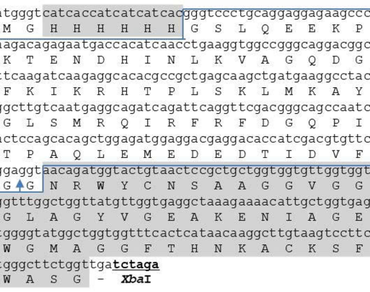
Recently, the application of bioadditives such as bacteriocins in food processing has received significant attention to replace chemical additives and maintain a safe and sustainable food supply. Among these, enterocin E-760 is a notable bacteriocin originated Enterrococcus sp., exhibiting great potential for food preservation due to its potent activity against both Gram-negative and Gram-positive bacteria, especially food-borne pathogens. In this study, the gene encoding enterocin E-760 was codon-optimized, fused with the sequence encoding the human SUMO-3 protein (507 bp) and inserted into pPICZαA for expression in P. pastoris. Mut+ integrants were screened via PCR and peptide expression was induced using methanol. After 48 h of induction, the culture supernatant of recombinant Pichia pastoris exhibited antilisterial activity of 80 AU mL−1. The recombinant enterocin E-760 was detected via SDS-PAGE with an estimated molecular weight of approximately 10 kDa. Furthermore, this recombinant peptide exhibited significant antimicrobial activity against several foodborne strains, such as Bacillus subtilis ATCC 6633, Bacillus cereus ATCC 10876 and Staphylococcus aureus ATCC 6538, with the activity level reaching up 320 AU mL−1. In conclusion, the antimicrobial peptide enterocin E-760 fused with SUMO protein was sucessfully expressed in P. pastoris X33 and demonstrated strong antimicrobial activity against some pathogenic bacterial strains. These findings highlight its potential applications in food preservation. However, further purification and characterization are required to enhance its effectiveness, particularly against harmful Gram-negative bacteria.
References
Arbulu S, Jiménez JJ, Gútiez L et al (2015) Cloning and expression of synthetic genes encoding the broad antimicrobial spectrum bacteriocins SRCAM 602, OR-7, E-760, and L-1077, by recombinant Pichia pastoris. Biomed Res Int. https://doi.org/10.1155/2015/767183
Borrero J, Kunze G, Jiménez JJ et al (2012) Cloning, production, and functional expression of the bacteriocin enterocin A, produced by Enterococcus faecium T136, by the yeasts Pichia pastoris, Kluyveromyces lactis, Hansenula polymorpha, and Arxula adeninivorans. Appl Environ Microbiol 78:5956–5961. https://doi.org/10.1128/AEM.00530-12
Butt TR, Edavettal SC, Hall JP, Mattern MR (2005) SUMO fusion technology for difficult-to-express proteins. Protein Expr Purif 43:1–9. https://doi.org/10.1016/j.pep.2005.03.016
Chen X, Bai H, Mo W et al (2025) Lactic acid bacteria bacteriocins: safe and effective antimicrobial agents. Int J Mol Sci 26(9):4124. https://doi.org/10.3390/ijms26094124
De Brabander P, Uitterhaegen E, Delmulle T et al (2023) Challenges and progress towards industrial recombinant protein production in yeasts: a review. Biotechnol Adv 64:108121. https://doi.org/10.1016/j.biotechadv.2023.108121
Fujii A, Kawada-Matsuo M, Le MNT et al (2025) Comprehensive analysis of bacteriocins produced by clinical enterococcal isolates and their antibacterial activity against Enterococci including VRE. Sci Rep 15:4846. https://doi.org/10.1038/s41598-025-89518-8
Hay RT (2007) SUMO-specific proteases: a twist in the tail. Trends Cell Biol 17(8):370–376. https://doi.org/10.1016/j.tcb.2007.08.002
Invitrogen LT (2010) User manual—EasySelectTM Pichia expression kit for expression of recombinant proteins using pPICZ and pPICZα in Pichia pastoris. Cat no K1740-01
Jain PM, Nellikka A, Kammara R (2024) Understanding bacteriocin heterologous expression: a review. Int J Biol Macromol 277:133916. https://doi.org/10.1016/j.ijbiomac.2024.133916
Jiménez JJ, Borrero J, Gútiez L et al (2014) Use of synthetic genes for cloning, production and functional expression of the bacteriocins enterocin A and bacteriocin E 50–52 by Pichia pastoris and Kluyveromyces lactis. Mol Biotechnol 56:571–583. https://doi.org/10.1007/s12033-014-9731-7
Karbalaei M, Rezaee SA, Farsiani H (2020) Pichia pastoris: a highly successful expression system for optimal synthesis of heterologous proteins. J Cell Physiol 235:5867–5881. https://doi.org/10.1002/jcp.29583
Ki MR, Pack SP (2020) Fusion tags to enhance heterologous protein expression. Appl Microbiol Biotechnol 104:2411–2425. https://doi.org/10.1007/s00253-020-10402-8
Krainer FW, Dietzsch C, Hajek T et al (2012) Recombinant protein expression in Pichia pastoris strains with an engineered methanol utilization pathway. Microb Cell Fact 11:22. https://doi.org/10.1186/1475-2859-11-22
Laemmli UK (1970) Cleavage of structural proteins during the assembly of the head of bacteriophage T4. Nature. https://doi.org/10.1038/227680a0
Le TN, Do TH, Nguyen TN et al (2014) Expression and simple purification strategy for the generation of anti-microbial active Enterocin P from Enterococcus faecium expressed in Escherichia coli ER2566. Iran J Bio 12(4):17-25. https://doi.org/10.15171/ijb.1154
Li P, Anumanthan A, Gao XG et al (2007) Expression of recombinant proteins in Pichia pastoris. Appl Biochem Biotechnol 142(2):105–124. https://doi.org/10.1007/s12010-007-0003-x
Li X, Yang N, Fang Y et al (2024) Fusion partner facilitates expression of cell-penetrating peptide L2 in Pichia pastoris. Antibiotics 13(12):1207. https://doi.org/10.3390/antibiotics13121207
Line JE, Svetoch EA, Eruslanov BV et al (2008) Isolation and purification of enterocin E-760 with broad antimicrobial activity against Gram-positive and Gram-negative bacteria. Antimicrob Agents Chemother 52(3):1094–1100. https://doi.org/10.1128/AAC.01569-06
Nguyen KHV, To LA, Luong KP (2022) Expression of the recombinant enterocin E-760 in Pichia pastoris X33 and its antimicrobial activity towards Listeria monocytogenes. Sains Malays 51(6):1667–1676. https://doi.org/10.17576/jsm-2022-5106-05
Park AR, Kim SW, Kim SY, Kwon KC (2021) Expression of antimicrobial peptide (AMP), cecropin B, in a fused form to SUMO tag with or without three-glycine linker in Escherichia coli and evaluation of bacteriolytic activity of the purified AMP. Probiotics Antimicrob Proteins 13(6):1780–1789. https://doi.org/10.1007/s12602-021-09797-1
Paul M, Chowdhury T, Saha S (2023) Antimicrobial peptide: a competent tool for plant disease control in mulberry-a review. Vegetos 36:733–742. https://doi.org/10.1007/s42535-022-00455-7
Quezada-Rivera JJ, Soria-Guerra RE, Pérez-Juárez FS et al (2019) Heterologous expression of bacteriocin E-760 in Chlamydomonas reinhardtii and functional analysis. Phyton (b Aires) 88(1):25–35. https://doi.org/10.32604/PHYTON.2019.04549
Wadgaonkar M, Tale V, Chavan Y (2023) Cloning of laccase gene from Coriolopsis caperata into heterologous E.coli host. Vegetos 36:195–200. https://doi.org/10.1007/s42535-022-00480-6
Wang Q, Fu W, Ma Q et al (2013) Production of bacteriocin E50-52 by small ubiquitin-related modifier fusion in Escherichia coli. Pol J Microbiol 62(4):345–350. https://doi.org/10.33073/pjm-2013-047
Wang XJ, Wang XM, Teng D et al (2014) Recombinant production of the antimicrobial peptide NZ17074 in Pichia pastoris using SUMO-3 as a fusion partner. Lett Appl Microbiol 59(1):71–78. https://doi.org/10.1111/lam.12246
Wang Y, Shang N, Huang Y et al (2025) The progress of the biotechnological production of class IIa bacteriocins in various cell factories and its future challenges. Int J Mol Sci 25(11):5791. https://doi.org/10.3390/ijms25115791
Wu Y, Pang X, Wu Y et al (2022) Enterocins: classification, synthesis, antibacterial mechanisms and food applications. Molecules 27(7):2258. https://doi.org/10.3390/molecules27072258
Xu Y, Dong M, Wang Q et al (2023) Soluble expression of antimicrobial peptide BSN-37 from Escherichia coli by SUMO fusion technology. Protein J 42(5):563–574. https://doi.org/10.1007/s10930-023-10144-2
Yan Y, Orcutt SJ, Strickler JE (2009) The use of SUMO as a fusion system for protein expression and purification. Chim Oggi 27(6):42–47
Zangeneh M, Khorrami S, Khaleghi M (2020) Bacteriostatic activity and partial characterization of the bacteriocin produced by L. plantarum sp. isolated from traditional sourdough. Food Sci Nutr 8(11):6023–6030. https://doi.org/10.1002/fsn3.1890
Zhan N, Zhang L, Yang H et al (2021) Design and heterologous expression of a novel dimeric LL37 variant in Pichia pastoris. Microb Cell Fact 20:143. https://doi.org/10.1186/s12934-021-01635-x
Zhuang H, Ou Y, Chen R et al (2023) Comparing the ability of secretory signal peptides for heterologous expression of anti-lipopolysaccharide factor 3 in Chlamydomonas reinhardtii. Mar Drugs 21(6):346. https://doi.org/10.3390/md21060346
Author Information
Department of Biology, Institute of Materials, Biology and Environment, Academy Military of Science and Technology, Hanoi, Vietnam