Vegetos

(An International Journal of Plant Research & Biotechnology)
(eISSN: 2229-4473)
Variation in antioxidant activity and phytochemical constituents of Didymocarpus pedicellatus R.Br. across three phenological phases
*Article not assigned to an issue yet
Chandra Ishita, Pant Sugandha, Bahuguna Aabha, Chaturvedi Preeti
Research Articles | Published: 08 September, 2026
First Page: 0
Last Page: 0
Views: 101
Keywords: n Didymocarpus pedicellatusn , Phenological stages, Phytochemistry, Gas chromatography, Mass spectrometry, Antioxidants
Abstract
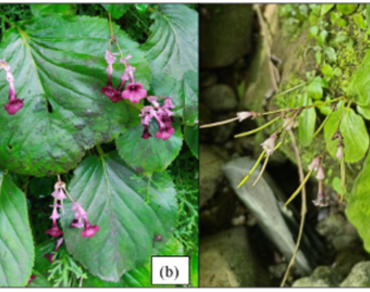
Didymocarpus pedicellatus R.Br., popularly known as Charela, Patharphori and Pashanbhed, is an important medicinal herb of the family Gesneriaceae. All parts of the plant have pharmaceutical applications, with the leaves particularly used for the treatment of renal diseases, especially kidney stones. The present study investigated the changes in the content and composition of phenolics, flavonoids, tannins, antioxidants and metabolic profile of methanolic leaf extracts across three phenological stages, namely, vegetative, flowering and fruiting. The results showed significant (p???0.05) variation in the chemical profile across these stages. Total phenolics and flavonoids reached their highest levels during the vegetative stage, whereas, total tannins peaked during the flowering stage. Among the three phenophases, the vegetative stage showed maximum antioxidant potential as exhibited by DPPH free radical scavenging assay, ferric reducing antioxidant power and total antioxidant capacity determined by phosphomolybdenum assay. GC-MS analysis revealed phenological stage-dependent phytochemical variation, with triterpenoids (10.82–20.99%) being the predominant class followed by flavonoids, diterpenoids, and phytosterols. Hierarchical cluster analysis (HCA) showed that the phytochemical profiles of the vegetative and flowering stages were more similar to each other, whereas the fruiting stage formed a distinct cluster, suggesting that the metabolic profile of the plant changes as it matures. Thus, the study established that the phenological stages significantly influence the concentration of phytoconstituents and, in turn, their resulting antioxidant activities. It also identified the optimal harvesting stage of D. pedicellatus, viz., the vegetative stage, for higher phytochemical and antioxidant potential.
References
Abbas A, Naqvi SAR, Rasool MH, Noureen A, Mubarik MS, Tareen RB (2021) Phytochemical analysis, antioxidant and antimicrobial screening of Seriphidium oliverianum plant extracts. Dose Response 19:15593258211004739. https://doi.org/10.1177/15593258211004739
Ahmad W, Khan MA, Ashraf K, Ahmad A, Ali MD, Ansari MN, Kamal YT, Wahab S, Zaidi SA, Mujeeb M et al (2021) Pharmacological evaluation of Safoof-e-Pathar Phori: a polyherbal Unani formulation for urolithiasis. Front Pharmacol 12:597990. https://doi.org/10.3389/fphar.2021.597990
Babu S, Jayaraman S (2020) An update on β-sitosterol: a potential herbal nutraceutical for diabetic management. Biomed Pharmacother 131:110702. https://doi.org/10.1016/j.biopha.2020.110702
Bakrim S, Benkhaira N, Bourais I, Benali T, Lee LH, El Omari N, Sheikh RA, Goh KW, Ming LC, Bouyahya A (2022) Health benefits and pharmacological properties of stigmasterol. Antioxidants 11(10):1912. https://doi.org/10.3390/antiox11101912
Benzie IF, Strain JJ (1996) The ferric reducing ability of plasma (FRAP) as a measure of antioxidant power: the FRAP assay. Anal Biochem 239:70–76. https://doi.org/10.1006/abio.1996.0292
Bhattacharyya P, Kumaria S, Diengdoh R, Tandon P (2014) Genetic stability and phytochemical analysis of the in vitro regenerated plants of Dendrobium nobile Lindl., an endangered medicinal orchid. Meta Gene 2:489–504. https://doi.org/10.1016/j.mgene.2014.06.002
Biswas A, Dey S, Xiao A, Huang S, Birhanie ZM, Deng Y, Liu L, Li D (2023) Phytochemical content and antioxidant activity of different anatomical parts of Corchorus olitorius and C. capsularis during different phenological stages. Heliyon 9:e16222. https://doi.org/10.1016/j.heliyon.2023.e16222
Brain KR, Turner TD (1975) The practical evaluation of phytopharmaceuticals. Wright-Scientechnica, Bristol, UK
Chandra I, Divya, Bahuguna A, Chaturvedi P (2026) Evaluation of antioxidant potential of essential oil and methanolic extract from the leaves of Didymocarpus pedicellatus R. Br.: an endemic Himalayan herb. Med Plants Int J Phytomed Relat Ind 18(1):122–132. https://doi.org/10.5958/0975-6892.2026.00014.8
Divya CP (2025) Impact of altitude on photosynthetic and biochemical profile of Didymocarpus pedicellatus R.Br.: an antiurolithiatic Himalayan herb. Pantnagar J Res 23(1):18–24. https://doi.org/10.67063/pjr.23.issue.01.03
Djeridane A, Yousfi M, Nadjemi B, Boutassouna D, Stocker P, Vidal N (2006) Antioxidant activity of some Algerian medicinal plants extracts containing phenolic compounds. Food Chem 97:654–660. https://doi.org/10.1016/j.foodchem.2005.04.028
Gan R, Liu Y, Li H, Xia Y, Guo H, Geng F, Zhuang Q, Li H, Wu D (2024) Natural sources, refined extraction, biosynthesis, metabolism, and bioactivities of dietary polymethoxyflavones (PMFs). Food Sci Hum Wellness 13(1):27–49. https://doi.org/10.26599/FSHW.2022.9250003
Goraya GS, Ved DK (2017) Medicinal plants in India: an assessment of their demand and supply. National Medicinal Plants Board, Ministry of AYUSH, Government of India, New Delhi and Indian Council of Forestry Research & Education, Dehradun
Goyal PK, Verma SK, Sharma I, Sharma A, Sharma AK (2015) Ethnobotanical and phytopharmacological updates on Didymocarpus pedicellata. Indo Am J Pharm Sci 5:2747–2755
Guha PK, Bhattacharya A (1992) 5,8-Dihydroxyflavone from the immature leaves of Didymocarpus pedicellata. Phytochemistry 31:1833–1834. https://doi.org/10.1016/0031-9422(92)83023-U
Hazrati S, Hosseini SJ, Ebadi MT, Nicola S (2022) Evolution of phytochemical variation in myrtle (Myrtus communis L.) organs during different phenological stages. Horticulturae 8:757. https://doi.org/10.3390/horticulturae8090757
Ishikura N (1976) Seasonal changes in contents of phenolic compounds and sugar in Rhus, Euonymus and Acer leaves with special reference to anthocyanin formation in autumn. Bot Mag Tokyo 89:251–257. https://doi.org/10.1007/BF02489450
Islam MT, Ali ES, Uddin SJ, Shaw S, Islam MA, Ahmed MI, Shill MC, Karmakar UK, Yarla NS, Khan IN, Billah MM (2018) Phytol: A review of biomedical activities. Food Chem Toxicol 121:82–94. https://doi.org/10.1016/j.fct.2018.08.032
Jakovljevic ZD, Stankovic SM, Topuzovic DM (2013) Seasonal variability of Chelidonium majus L. secondary metabolites content and antioxidant activity. EXCLI J 12:260–268. https://doi.org/10.17877/DE290R-5473
Joyce Priyakumari C, Aparna K, Sagaya Jansi R (2014) Phytochemical analysis of Didymocarpus pedicellatus. Int J Pharm Sci Rev Res 25:307–309
Khare CP (2007) Indian medicinal plants: an illustrated dictionary. Springer, New York
Lone IA, Ali M, Alam MS, Mir SR, Sultana S (2020) Chemical constituents of the aerial parts of Didymocarpus pedicellatus R. Br. Eur J Pharm Med Res 7:482–487
Nanjala C, Odago WO, Rono PC, Waswa EN, Mutinda ES, Oulo MA, Muema FW, Wanga VO, Mkala EM, Kuja J et al (2022) A review on ethnobotany, phytochemistry, and pharmacology of the genus Didymocarpus Wall. (Gesneriaceae). J Ethnopharmacol 295:115404. https://doi.org/10.1016/j.jep.2022.115404
Prasad K, Chandra D (2017) Antioxidant activity, phytochemical and nutrients of Didymocarpus pedicellata R. Br. from Pithoragarh, Uttarakhand Himalayas, India. J Pharmacol Clin Res 4:1–8. https://doi.org/10.19080/JPCR.2017.04.555640
Prieto P, Pineda M, Aguilar M (1999) Spectrophotometric quantitation of antioxidant capacity through the formation of a phosphomolybdenum complex: specific application to the determination of vitamin E. Anal Biochem 269:337–341. https://doi.org/10.1006/abio.1998.9999
Rajesh KD, Vasantha S, Panneerselvam A, Rajesh NV, Jeyathilakan N (2016) Phytochemical analysis, in vitro antioxidant potential and gas chromatography-mass spectrometry studies of Dicranopteris linearis. Asian J Pharm Clin Res 9:1–6. https://doi.org/10.22159/ajpcr.2016.v9s2.13636
Rathore JS, Garg SK, Gupta SR (1981) A chalcone and flavones from Didymocarpus pedicellata. Phytochemistry 20:1755–1756. https://doi.org/10.1016/0031-9422(81)83091-1
Reddy LH, Couvreur P (2009) Squalene: a natural triterpene for use in disease management and therapy. Adv Drug Deliv Rev 61(15):1412–1426. https://doi.org/10.1016/j.addr.2009.09.005
Riipi M, Ossipov V, Lempa K, Haukioja E, Koricheva J, Ossipova S, Pihlaja K (2002) Seasonal changes in birch leaf chemistry: Are there trade-offs between leaf growth and accumulation of phenolics? Oecologia 130:380–390. https://doi.org/10.1007/s00442-001-0826-z
Saxena M, Saxena J, Nema R, Singh D, Gupta A (2013) Phytochemistry of medicinal plants. J Pharmacogn Phytochem 1:168–182
Shankar D (2019) The FRLHT-TDU story of conservation and sustainable use of medicinal flora. J Med Plant Conserv 25:45–63
Singh A, Kumari K, Tandon S, Kaur T, Tandon C (2025) Reno-protection by Didymocarpus pedicellata against oxalate-induced damage: mechanistic insights into mitigation of oxidative stress induced signaling pathways in renal cell line and rat model. Urolithiasis 53(1):131. https://doi.org/10.1007/s00240-025-01794-1
Singh AP (2007) Didymocarpus pedicellata: the lithontriptic ethnomedicine. Ethnobot Leafl 11:73–75
Ved DK, Kinhal GA, Ravikumar K, Prabhakaran V, Ghate U, Vijaya Shankar R, Indresha JH (2003) Conservation assessment and management prioritization for the medicinal plants of Jammu & Kashmir. Himachal Pradesh & Uttaranchal. Foundation for Revitalisation of Local Health Traditions, Bangalore, India
Venkata RB, Samuel LA, Pardha SM, Narashima RB, Naga VKA, Sudhakar M, Radhakrishnan TM (2012) Antibacterial, antioxidant activity and GC-MS analysis of Eupatorium odoratum. Asian J Pharm Clin Res 5:99–106
Verma N, Shukla S (2015) Impact of various factors responsible for fluctuation in plant secondary metabolites. J Appl Res Med Aromat Plants 2:105–113. https://doi.org/10.1016/j.jarmap.2015.05.003
Vlaisavljevi? S, Kaurinovi? B, Popovi? M, Vasiljevi? S (2017) Profile of phenolic compounds in Trifolium pratense L. extracts at different growth stages and their biological activities. Int J Food Prop 20:3090–3101. https://doi.org/10.1080/10942912.2016.1274900
Weber A, Burtt BL, Vitek E (2000) Materials for a revision of Didymocarpus (Gesneriaceae). Ann Naturhist Mus Wien 102B:441–475
Wolfe K, Wu X, Liu RH (2003) Antioxidant activity of apple peels. J Agric Food Chem 51:609–614. https://doi.org/10.1021/jf020782a
Zribi I, Omezzine F, Haouala R (2014) Variation in phytochemical constituents and allelopathic potential of Nigella sativa with developmental stages. S Afr J Bot 94:255–262. https://doi.org/10.1016/j.sajb.2014.06.009
Author Information
Department of Biological Sciences, College of Basic Sciences and Humanities, Govind Ballabh Pant University of Agriculture and Technology, Pantnagar, India