Vegetos

(An International Journal of Plant Research & Biotechnology)
(eISSN: 2229-4473)
Nutritional attributes and oil content of pumpkin germplasm (Cucurbita spp.) seeds collected from different regions of Sikkim, Northeast India
*Article not assigned to an issue yet
Research Articles | Published: 25 October, 2026
First Page: 0
Last Page: 0
Views: 147
Keywords: Pumpkin seed, Nutrient, Minerals, Oil
Abstract
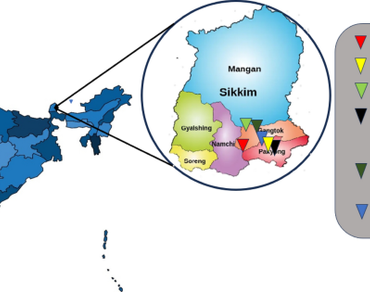
Pumpkin (Cucurbita spp.), belonging to the family Cucurbitaceae and locally known as Pharsi in Sikkim, has gained attention due to the nutritional and health-promoting properties of its seeds. Utilization of locally available and nutritionally rich crops is important for improving dietary quality, particularly in developing regions. Although pumpkin seeds are consumed in Sikkim in dried form or as chutney, their nutritional potential has not been widely explored for agro-industrial applications. Therefore, the present study aimed to evaluate the nutritional composition and oil content of pumpkin seeds collected from different locations of Sikkim. Seed samples were collected from six regions: Singtam, Sajong, Khamdong, Kamery, Simik-Lingzey, and Raigaon. Proximate composition, bioactive compounds, mineral content, and oil content were analyzed using standard methods. Results indicated variations among samples from different locations. Seeds from Singtam (T1) and Kamery (T4) showed higher protein (32.64%) and carbohydrate (29.71%) contents, respectively. Kamery (T4) recorded the highest ascorbic acid (38.07 mg/100 g), Raigaon (T5) showed the highest ?-carotene (31.76 ?g/g), and Simik-Lingzey (T6) had the highest flavonoid content (29.38 mg QE/g). Mineral analysis revealed that Sajong (T2) had higher levels of phosphorus, iron, sodium, and calcium, while the highest oil content (35.52%) was observed in Singtam (T1). The study demonstrates that pumpkin seeds from Sikkim are rich in nutrients, bioactive compounds, and oil, indicating their potential for nutritional use and value-added agro-industrial applications.
References
Aktas N, Uzlasir T, Tuncil YE (2018) Pre-roasting treatments significantly impact thermal and kinetic characteristics of pumpkin seed oil. Thermochim Acta 669:109–115. https://doi.org/10.1016/j.tca.2018.09.012
Amin M, Islam T, Mostofa F, Uddin M, Rahman M, Satter M (2019a) Comparative assessment of the physicochemical and biochemical properties of native and hybrid varieties of pumpkin seed and seed oil (Cucurbita maxima Linn.). Heliyon. https://doi.org/10.1016/j.heliyon.2019.e02994
Amin M, Islam T, Uddin M, Uddin M, Rahman M, Satter M (2019b) Comparative study on nutrient contents in the different parts of indigenous and hybrid varieties of pumpkin (Cucurbita maxima Linn.). Heliyon 5:e02462. https://doi.org/10.1016/j.heliyon.2019.e02462
Batool M, Ranjha M, Roobab U, Faisal M, Manzoor M, Farooq U, Nadeem H, Nadeem M, Kanwal R, Abd-Elgawad H, Jaouni S, Selim S, Ibrahim S (2022) Review: Nutritional value, phytochemical potential, and therapeutic benefits of pumpkin (Cucurbita sp.). Plants 11:1394. https://doi.org/10.3390/plants11111394
Chatepa L, Masamba K, Uluko H (2022) Nutritional, biochemical and phytochemical characterization of seeds and seed oil of pumpkins (Cucurbita maxima) grown in Malawi. Afr J Pure Appl Chem 16(3):57–65. https://doi.org/10.5897/AJPAC2022.0891
Dotto J, Chacha J (2020) The potential of pumpkin seeds as a functional food ingredient: a review. Sci Afr 10:e00575. https://doi.org/10.1016/j.sciaf.2020.e00575
Echessa ACP, Hudson N, Ondigi NA, Omuterema S, Toili W, Afihini SMI, Sande A (2013) Evaluation of micronutrients in seeds of pumpkin varieties grown by smallholder farmers in the Lake Victoria Basin. Afr J Food Sci Technol. 3(10):221–228. https://doi.org/10.14303/ajfst.2013.053
El - Adawy TA, Taha KM (2001) Characteristics and composition of different seed oils and flours. Food Chem 74(1):47–54. https://doi.org/10.1016/S0308-8146(00)00337-X
Elechi JOG, Sule JI (2023) Influence of traditional food processing systems on food safety, chemical compositions, and functional properties of pumpkin (Cucurbita pepo L.) seed flour. J Nutrit Food Secur (JNFS) 8(2):246–256. https://doi.org/10.18502/jnfs.v8i2.12598
Elinge CM, Muhammad A, Atiku FA, Itodo AU, Peni IJ, Sanni OM, Mbongo AN (2012) Proximate, mineral and anti-nutrient composition of pumpkin (Cucurbita pepo L.) seeds extract. Int J Plant Res 2(5):146–150. https://doi.org/10.5923/j.plant.20120205.02
Fu CL, Shi H, Li QH (2006) A review on pharmacological activities and utilization technologies of pumpkin. Plant Foods Hum Nutr 61:73–80. https://doi.org/10.1007/s11130-006-0016-6
Girgis P, Said I (1968) Characteristics of melon seed oil. J Sci Food Agric 19:615–616. https://doi.org/10.1002/jsfa.2740191014
Glew RH, Glew RS, Chuang LT, Huang YS, Millson M, Constans D, Vanderjagt DJ (2006) Amino acid, mineral and fatty acid content of pumpkin seeds (Cucurbita spp) and Cyperus esculentus nuts in the Republic of Niger. Plant Foods Hum Nutr 61:51–56. https://doi.org/10.1007/s11130-006-0010-z
Habib A, Biswas S, Siddique AH, Manirujjaman M, Uddin B, Hasan S, Khan MMH, Uddin M, Islam M, Hasan M, RahmanM AM, Sohanur Rahman M, Khatun M, Islam MA, Rahman M (2015) Nutritional and lipid composition analysis of pumpkin seed (Cucurbita maxima Linn.). J Nutr Food Sci 5:374. https://doi.org/10.4172/2155-9600.1000374
Hagos M, Redi-Abshiro M, Chandravanshi BS, Yaya EE (2022) Development of analytical methods for determination of β-carotene in pumpkin (Cucurbita maxima) flesh, peel, and seed powder samples. Int J Anal Chem. https://doi.org/10.1155/2022/9363692
Haokip SW, Sheikh KhA, Das S, Devi OB, Singh YD, Wangchu L, Heisnam P (2023) Unraveling physicochemical profiles and bioactivities of citrus peel essential oils: a comprehensive review. Eur Food Res Technol 249(11):2821–2834. https://doi.org/10.1007/s00217-023-04330-w
Hassan S, Shakak M, Mariod A, Mustafa S (2024) Seed composition, physical characteristics and mineral content of Sudanese landraces of pumpkin. Acta Agric Slov 120(1):1–12. https://doi.org/10.14720/aas.2024.120.1.16382
Hussain A, Kausar T, Din A, Murtaza M, Jamil M, Noreen S, Rehman H, Shabbir H, Ramzan M (2021) Determination of total phenolic, flavonoid, carotenoid, and mineral content in peel, flesh, and seeds of pumpkin (Cucurbita maxima). J Food Process Preserv 00:e15542. https://doi.org/10.1111/jfpp.15542
Idouraine A, Kohlhepp EA, Weber CW (1996) Nutrient constituents from eight lines 320 of naked seed squash (Cucurbita pepo L.). J Agric Food Chem 44:721–772. https://doi.org/10.1021/jf950630y
Jafari M, Goli SAH, Rahimmalek A (2012) The chemical composition of the seeds of Iranian pumpkin cultivars and physicochemical characteristics of the oil extract. Eur J Lipid Sci Technol 114(2):161–167. https://doi.org/10.1002/ejlt.201100102
Kamel BS, Demain JM, Blackman B (1982) Nutritional, fatty acid and oil characteristics of different agricultural seed. Food Technol 17:263–267. https://doi.org/10.1111/j.1365-2621.1982.tb00181.x
Karanja JK, Mugendi BJ, Khamis FM, Muchugi AN (2013) Nutritional composition of the pumpkin (Cucurbita spp.) seed cultivated from selected regions in Kenya. J Horticult Lett 3(1):17–22. https://doi.org/10.5923/j.ijaf.20140403.08
Kassaye M, Hagos M, Chandravanshi B (2023) Determination of β-carotene in five commonly used Ethiopian vegetables using UV-Vis spectrophotometric method. Chem Int 9(3):111–119. https://doi.org/10.5281/zenodo.8117660
Kim M, Kim E, Kim Y, Choi C, Lee B (2012) Comparison of the chemical compositions and nutritive values of various pumpkin (Cucurbitaceae) species and parts. Nutr Res Pract 6(1):21–27. https://doi.org/10.4162/nrp.2012.6.1.21
Kukeera T, Banadda N, Tumutegyereize KN, Asuman R (2015) Extraction, quantification and characterization of oil from pumpkin seeds. Int J Agric Biol Eng 8(1):98–102. https://doi.org/10.3965/j.ijabe.20150801.013
Kumar M, Christodoulou MC, Kasodhan S, Kumar V, Krishnan H, Kaushik D (2026) Pumpkin seeds, oil, and flour in functional foods: effects of processing on composition, techno-functional performance, and therapeutic aspects. J Food Process Eng 6:e70615. https://doi.org/10.1111/jfpe.70615
Lazos E (1986) Nutritional, fatty acid, and oil characteristics of pumpkin and melon seeds. J Food Sci 51(5):1382–1383. https://doi.org/10.1111/j.1365-2621.1986.tb13133.x
Lestari B, Meiyanto E (2018) A review: the emerging nutraceutical potential of pumpkin seeds. Indones J Cancer Chemoprevent 9(2):92–101. https://doi.org/10.14499/indonesianjcanchemoprev9iss2pp92-101
Lowry OH, Rosebrough NJ, Farr AL, Randall RJ (1951) Protein measurement with the folin phenol reagent. J Biol Chem 193:265–275. https://doi.org/10.1016/S0021-9258(19)52451-6
Makni M, Fetoui H, Gargouri NK, Garoui EM, Zeghal N (2011) Antidiabetic effect of flax and pumpkin seed mixture powder: effect on hyperlipidemia and antioxidant status in alloxan diabetic rats. J Diabetes Complicat 25(5):339–345. https://doi.org/10.1016/j.jdiacomp.2010.09.001
Muthoni J, Shimelis H (2025) Nutritional and chemical composition of pumpkins (’Cucurbita ssp.’): Special focus on pumpkin seeds. Austr J Crop Sci 19(7):784–799. https://doi.org/10.3316/informit.T2025082300003200973389960
Najim S, Hameed M, Al-Shakban M, Fandi T (2020) Spectrophotometric determination of zinc in pharmaceutical medication samples using 8-hydroxyquinoline reagent. Int J Chem 12(1):29–36. https://doi.org/10.5539/ijc.v12n1p29
Nawirska-Olszanska A, Kita A, Biesiada A, Sokóle-letowska A, Kucharska, (2013) Characteristics of antioxidant activity and composition of pumpkin seed oils in 12 cultivars. Food Chem 139:155–161. https://doi.org/10.1016/j.foodchem.2013.02.009
Okoronkwo CM, Okoli EE (2021) Nutritional composition of some accessions of pumpkin (Cucurbita Sp.) seeds from Abia State, Nigeria. Int J Sci Technol 9(1):26–31. https://doi.org/10.24940/theijst/2021/v9/i1/ST2101-012
Patel S (2013) Pumpkin (Cucurbita sp.) seeds as nutraceutic: a review on status quo and scopes. Med J Nutr Metab 6(3):183–189. https://doi.org/10.1007/s12349-013-0131-5
Pradhan S, Rituparna S, Dehury H, Dhall M, Singh YD (2023) Nutritional profile and pharmacological aspect of Houttuynia cordata Thunb. And their therapeutic applications. Pharmacol Res - Modern Chin Med 9:100311. https://doi.org/10.1016/j.prmcm.2023.100311
Ramjan M, Pandey AK, Raghavan M, Lian H, Ansari M (2018) Variations in pumpkin (Cucurbita moschata Duch. ex Poir.) landraces for earliness yield and quality attributes in North East India. Int J Curr Microbiol Appl Sci 7(7):741–748. https://doi.org/10.20546/ijcmas.2018.707.091
Raza N, Sadaf A, Mushtaq R, Mehmood MA, Amrao L, Islam F, Afzaal M, Shah MA (2026) Nutritional and health potential of edible seeds: micronutrient bioavailability and mechanistic insights. Food Sci Nutr 2:e71480. https://doi.org/10.1002/fsn3.71480
Sawaya NW, Daghir JN, Khan P (1983) Chemical characterization and edibility of oil extracted from Citrullus colocynthis seeds. J Food Sci 48:104. https://doi.org/10.1111/j.1365-2621.1983.tb14799.x
Seymen M, Uslu N, Turkmen O, Juhaimi F, Ozcan M (2016) Chemical compositions and mineral contents of some hull-less pumpkin seed and oils. J Am Oil Chem Soc 93:1095–1099. https://doi.org/10.1007/s11746-016-2850-5
Sharma P, Kaur G, Kehinde BA, Chhikara N, Panghal A, Kaur H (2020) Pharmacological and biomedical uses of extracts of pumpkin and its relatives and applications in the food industry: a review. Int J Veg Sci 26(1):79–95. https://doi.org/10.1080/19315260.2019.1606130
Siano F, Straccia M, Paolucci M, Fasulo G, Bosciano F, Volpe M (2015) Physico-chemical properties and fatty acid composition of pomegranate, cherry and pumpkin seed oils. J Sci Food Agric 96:1730–1735. https://doi.org/10.1002/jsfa.7279
Singh A, Kumar V (2021) Nutritional, phytochemical, and antimicrobial attributes of seeds and kernels of different pumpkin cultivars. Food Front 3:182–193. https://doi.org/10.1002/fft2.117
Stevenson D, Eller F, Wang L, Jane J, Wang T, Inglett G (2007) Oil and tocopherol content and composition of pumpkin seed oil in 12 cultivars. J Agric Food Chem 55:4005–4013. https://doi.org/10.1021/jf0706979
Syam A, Zainal W, Cangara MH, Kurniati Y, Hasfia NA (2023) Nutrient content and toxicity of pumpkin seed flour. Food Res 7(6):69–76. https://doi.org/10.26656/fr.2017.7(6).069
Syed QA, Akram M, Shukat R (2019) Nutritional and therapeutic importance of the pumpkin seeds. Biomed J Sci Tech Res 21(2):15798–15803. https://doi.org/10.26717/BJSTR.2019.21.003586
Tarek A, El-Adaway KT (2001) Characteristics and composition of different seed oils and flours. Food Chem 74(1):47–54. https://doi.org/10.1016/S0308-8146(00)00337-X
Thangiah A, Anthoney A, Laolee W (2022) Spectrophotometric determination of iron content in six indigenous green leafy vegetables consumed in Muak Lek Thailand. RAS?YAN J Chem 15(1):197–203. https://doi.org/10.31788/RJC.2022.1516446
Tsaknis J, Lalas S, Lazos ES (1997) Characterization of crude and purified pumpkin seed oil. Grasas Aceites 48:267–272. https://doi.org/10.3989/gya.1997.v48.i5.802
Ullah A, Munir S, Badshah S, Khan N, Ghani L, Poulson B, Emwas A, Jaremko M (2020) Important flavonoids and their role as a therapeutic agent. Molecules 25(22):5243.
Voranunt SS, Yarnnon C, Ngunboonsri P (1987) The effects of pumpkin seeds on oxaicrystafluria and urinary compositions of children in hyperendemic area. Am J Clin Nutr 45(1):115–121. https://doi.org/10.1093/ajcn/45.1.115
Wenzl T, Prettner E, Schweigner K, Wagner FS (2002) An improved method to discover adulteration of Syrian pumpkin seed oil. J Biochem Biophys Methods 53(3):193–202. https://doi.org/10.1016/S0165-022X(02)00108-2
William E, Abubakar M, Timothy N (2020) Proximate, elemental and anti-nutrients composition of pumpkin seed (Cucurbita maxima duch ex lam) obtained from Duvu Mubi, South Adamawa State, Nigeria. Int J Nutr Food Sci 9(4):112–117. https://doi.org/10.11648/j.ijnfs.20200904.13
Author Information
Department of Horticulture, Sikkim University, Gangtok, India